


Drop Away: Color Puzzle
4.4787.00 Reviews
App Specs
- Version
- 1.28.1
- Updated On
- License
- Free
- Downloads
- 1,000,000+
- Developer
- Rollic Games
- Categories
- Puzzle
- Platform
- Android
Screenshots
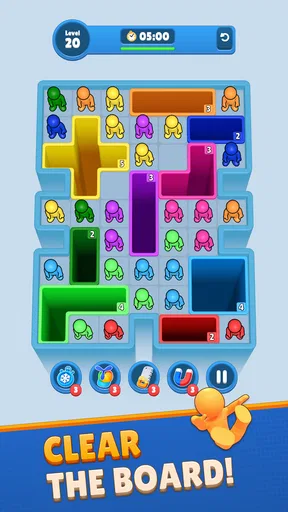
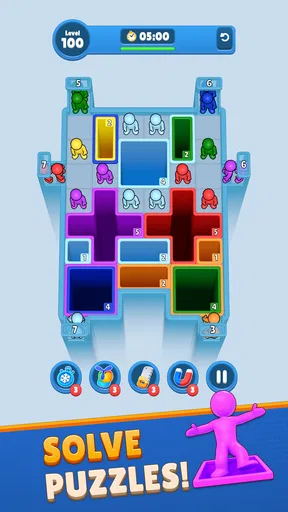
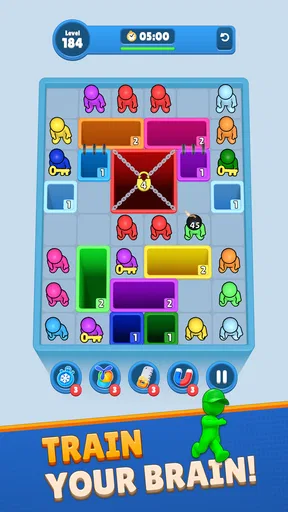
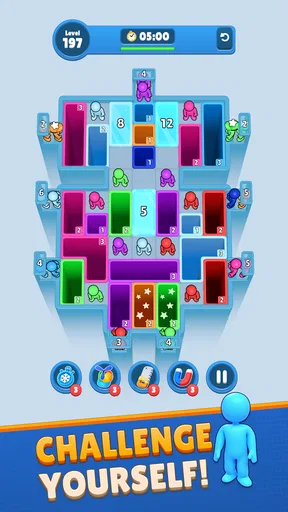
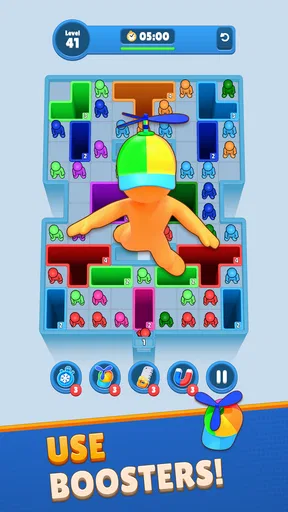
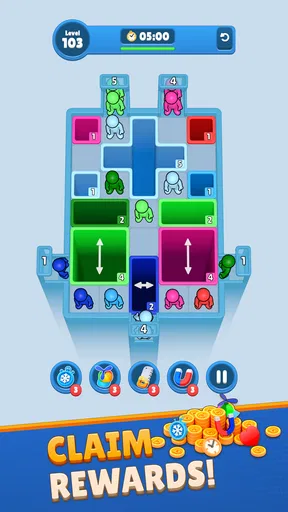
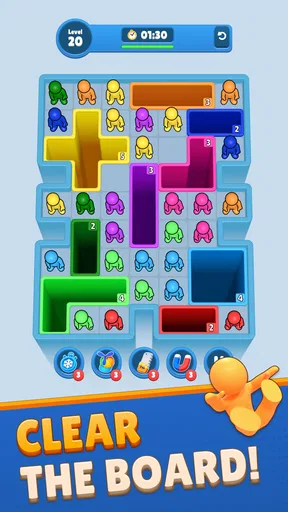
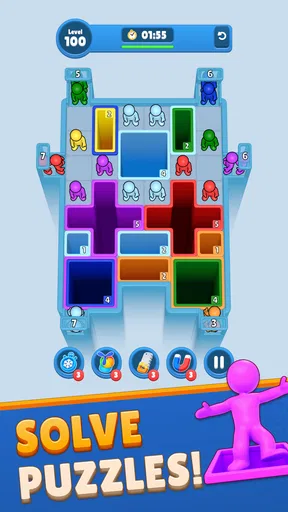
 Analysis by AppCompare
I tend to reach for a puzzle game when I have a few spare minutes but don’t want to start something that demands a long, uninterrupted session. Drop Away: Color Puzzle is aimed at that sort of moment: a colorful, easy-to-approach game built around thinking about where pieces will land. Its basic idea is simple, but the appeal depends on whether you enjoy pausing to plan rather than making quick reactions.
How the game fits into a short break
In my experience, the most useful way to approach a drop-based puzzle is to treat each move as a small prediction. Before tapping, take a moment to look at the available space and consider what the falling element may change. That habit makes the game feel less like trial and error and more like a compact logic exercise. It also gives a short session a natural rhythm: inspect the board, make a move, then see whether the result matches your plan.
This makes it a reasonable choice for waiting for a bus, winding down after work, or taking a break between tasks. I would not count on every level being a quick one, though. A puzzle that looks straightforward can take longer if I rush and need to rethink the arrangement. If you need a game that can be put down instantly without losing your place, check how the current session behaves on your device before relying on it for very brief interruptions.
Who is likely to enjoy the challenge
I’d recommend trying it if you like visual puzzles where placement matters and you can learn by observing how pieces interact. The color-based presentation makes the central task approachable, while the need to anticipate a drop gives you something to reason through. You don’t need to be a dedicated puzzle player to understand the premise, but patience helps once the layouts demand more thought.
It may be less satisfying if your favorite puzzle games are built around wordplay, number grids, or a single correct answer you can derive on paper. This is a more spatial kind of problem-solving: you are judging positions and consequences rather than filling in clues. Players who want a brisk action game may also find the deliberate pace too quiet. That is not a flaw so much as a matter of taste, and it is worth knowing before choosing it as your next time-filler.
Small habits that make levels easier to read
One practical tip is to avoid using a hint the moment a level stops being obvious. I find it more useful to first identify which spaces are likely to become blocked and then test a move that preserves room for later pieces. Even if that attempt fails, it can clarify what the board is asking you to notice. Save the hint for when you have genuinely run out of useful possibilities, rather than treating it as a shortcut through every difficult stage.
Another helpful habit is to watch the result of each drop before planning several moves ahead. It is tempting to form a long sequence in your head, but a single placement can change the shape of the available area. Planning one move, checking the new arrangement, and then adjusting is often more reliable than committing to a complicated chain based on an assumption. This is especially useful when you are playing casually and don’t want a mistake to turn into a frustrating restart.
Worth Reading Before You Choose

EA SPORTS FC Mobile 26 Is a Bigger Football Game, but It Takes Time

Flipboard Shows What News Apps Must Do Beyond the Feed

Switching to Android Auto Means Rethinking Your Driving Routine

Google Calendar Makes a Crowded Week Easier to Manage

Ludo King Makes the Most of the Minutes Between Plans

Baby Panda World Brings Quick Play to Modern Phones, but Its Game Library Feels Busy
The game’s color-forward presentation can also be a reason to take a break from it if you are tired or playing in a distracting environment. A bright board may be easy to read at a glance, but careful placement still asks for attention. I’d choose a quieter moment for levels that need more planning and leave a quick, low-pressure session for a commute or a short pause. That way, the game’s visual focus works for you instead of becoming another source of noise.
How it compares with familiar puzzle styles
Compared with a traditional match-three game, the appeal here is less about chasing a chain of quick matches and more about predicting the consequences of placing something into a specific space. It also differs from a classic falling-block game: the resemblance is in the act of dropping elements, not a guarantee that the pace or rules will feel the same. If you want fast rounds and constant reactions, a match-three title may be a better fit; if you prefer to study a board before acting, this approach has more to offer.
Against word puzzles or Sudoku-style games, it is less suited to players who want to work through a fixed set of clues. The challenge is visual and positional, which can feel refreshing when you are tired of grids filled with numbers or letters. The trade-off is that someone who prefers a clearly written problem may find the board harder to reason about. I’d think of it as a different flavor of casual puzzle, not a replacement for every kind of brain teaser.
What to expect from access and spending
The game is free to install, and it is published by Rollic Games. Its Everyone content rating makes it broadly suitable for general audiences, though individual families should still decide what feels appropriate for their own players. In-app purchases are available, with items ranging from $1.99 to $99.99 each. I’d approach those as optional spending rather than part of the basic reason to try a puzzle game: decide in advance whether you are comfortable making purchases, and use your device’s purchase controls if children may play.
It has an average rating of 4.3 from around 24,000 ratings, with over 1 million installs. Those figures suggest that many players have given it a try, but they cannot tell you whether its particular style will suit you. I’d use the rating as a general signal, then judge the game by whether you enjoy spatial planning and its pace. The current version is 1.16.2, and the game was released on May 2, 2025. Those facts establish its present release context; they are not a promise about what future updates will add.
What existing players should keep in mind
If you already play, the most useful question is whether the current challenge still feels fair and readable to you. When a puzzle seems to demand a hint, try changing the order in which you consider placements first. Sometimes the apparent obstacle is not the color match itself but a space that will become inconvenient after a drop. That approach can make familiar levels feel more deliberate without assuming there is a hidden mechanic or shortcut to discover.
For someone returning after a break, I’d ease back in with a level that lets you reacquaint yourself with the board and controls rather than jumping straight into the hardest challenge available. The point is not to rush through content; it is to recover the habit of predicting how a placement changes what remains. If your interest has faded because you prefer a different kind of puzzle, it is perfectly reasonable to move on instead of treating every new session as something you need to keep up with.
Current strengths and the limits of what to expect
The clearest strength is the straightforward premise: pieces drop, colors matter, and the player has to think about the outcome. That gives the game a low barrier to entry without making every move automatic. The main limitation is that this kind of puzzle can become repetitive for anyone who wants a constant stream of new rules or a story to follow. A simple, focused format is appealing when you want a mental pause, but it may not hold your attention if you need a broader progression system to stay engaged.
I would also avoid assuming that a daily routine or a familiar puzzle format means every session will feel equally rewarding. Some days you may want a gentle challenge; on others, even a small placement puzzle can feel like work. It is fine to use it selectively. Keeping sessions short when you are not in the mood can preserve the game’s casual appeal better than pushing through levels simply because they are available.
As the game continues to evolve, I would watch for clear changes in the version history rather than guessing what a future release might contain. A version number tells you which build is current, but it does not by itself establish new modes, balance changes, or added content. For existing players, concrete notes about adjustments would be the useful evidence; for new players, the better test remains whether the present puzzle style is enjoyable on its own.
On Android, the stated minimum operating-system requirement is version 7.0. If you are deciding whether to install it on an older device, check that your system meets that requirement and leave enough room for the app to run comfortably. The game is also available on iOS, so it can suit players who switch between the two mobile ecosystems, but I would not assume that controls or performance are identical across devices.
When I’d choose something else
I would skip it if I were looking for a deep strategy game, a competitive puzzle with a focus on opponents, or a narrative experience that unfolds over many sessions. Its main draw is the immediate act of solving a color-and-placement problem. For more varied mental exercises, a collection of word, number, and spatial puzzles may be a better choice. For a calmer one-task-at-a-time break, however, this game’s focused format is precisely the point.
It is also not my first pick when I want to play with friends in the same room. The satisfaction comes from working through a board at your own pace, so the experience is naturally more individual than conversational. If you enjoy comparing solutions afterward, you can still share the general challenge with another player, but I would not choose it expecting a built-in social activity or a shared cooperative session.
My take before you install
First things first, downloading Drop Away: Color Puzzle was a breeze. It's available on both Android and iOS, so no matter what device you're using, you can dive right in. The app's interface is sleek and user-friendly, which is always a plus. I didn’t have to wade through endless tutorials or ads before getting into the game, which is refreshing.
Once you launch the game, you’re greeted with a vibrant and inviting home screen. The colors are eye-catching, without being overwhelming. The controls are intuitive, so you can jump into solving puzzles without a steep learning curve. Trust me, even if you're not a seasoned gamer, you'll find your way around pretty quickly.
Inside the puzzle experience
I’d use this section to focus on the practical feel of solving a board: taking a beat to inspect the open spaces, making one considered move, and then reassessing what changed. That small, repeatable rhythm is what makes a color-placement puzzle easier to fit into an ordinary break, while also showing when I’d rather save a level for a quieter moment.
Gameplay and Features
Now, onto the meat of the game — the puzzles themselves. The concept is simple yet addictive. You need to match colors by strategically "dropping" elements into place. The challenge lies in predicting how these elements will interact as they fall. It’s a bit like playing Tetris, but with an artsy twist.
Each level presents a unique challenge, and the difficulty ramps up in a way that keeps things interesting. I found myself saying, "Just one more level," far too many times. What’s great is that the game doesn't just throw impossible challenges at you. Instead, it encourages you to think ahead and plan your moves.
There's also a handy hint system for when you get stuck, which I admit, I’ve used more than once. It’s a nice feature that keeps frustration at bay without making things too easy. Plus, there are daily challenges and rewards that keep you coming back for more.
Graphics and Sound
The graphics in Drop Away: Color Puzzle are stunning. The developers have done a fantastic job of creating a visually appealing game without overloading the senses. The animations are smooth, and the transitions are seamless, which adds to the overall enjoyment.
The sound design complements the visuals perfectly. The background music is soothing, which is ideal for a puzzle game. It helps set the mood without distracting from the gameplay. If you're like me and sometimes prefer playing in silence, you can easily adjust the sound settings.
Replayability and Community
One of the things I love most about Drop Away: Color Puzzle is its replayability. With hundreds of levels to tackle, you’re unlikely to get bored anytime soon. Plus, the game frequently updates with new content, keeping things fresh.
There’s also a small but passionate community of players. Whether you’re looking for tips or just want to share your high scores, the community is welcoming and helpful. It's nice knowing that you're not alone in your puzzle-solving adventures.
Final Thoughts
All in all, Drop Away: Color Puzzle is a fantastic choice for anyone who loves a good brain teaser. It's challenging yet accessible, with beautiful graphics and a relaxing soundtrack. Whether you're looking to kill time or seriously engage your mind, this app has something to offer.
If you haven’t yet, I highly recommend giving it a try. You might just find yourself hooked like I did. And hey, if you do, let me know your thoughts. I'm always up for a chat about all things gaming!
Pros
- Engaging and colorful puzzle mechanics.
- Simple controls for easy gameplay.
- Variety of challenging levels.
- Offline play available.
- Minimal ads for free version.
Cons
- Limited hints can be frustrating.
- No multiplayer or social features.
- In-app purchases can be pricey.
- Repetitive music and sound effects.
- Occasional lag on older devices.
FAQs for Drop Away: Color Puzzle
What is Drop Away: Color Puzzle?
Drop Away: Color Puzzle is a captivating puzzle game that challenges players to strategically drop colored blocks to clear levels. The game's objective is to align blocks of the same color, which disappear when matched. It's designed for both casual and seasoned gamers, offering levels that increase in complexity.
How do you play Drop Away: Color Puzzle?
Players interact with the game by tapping and swiping to drop colored blocks onto the puzzle board. The goal is to match three or more blocks of the same color to clear them. As you progress, new obstacles and challenges appear, demanding strategic planning and problem-solving skills.
What are the main features of Drop Away: Color Puzzle?
The game boasts a variety of features, including vibrant graphics, hundreds of levels, and daily challenges. It offers power-ups and boosters to help players overcome difficult stages. The intuitive interface and smooth gameplay make it accessible to players of all ages, enhancing its replay value.
Is Drop Away: Color Puzzle free to download and play?
Yes, Drop Away: Color Puzzle is available for free on both Android and iOS platforms. While the core game is free, it offers in-app purchases for additional boosters, lives, and ad removal. These purchases are optional and not necessary to enjoy or complete the game.
Are there any ads in Drop Away: Color Puzzle?
Yes, the game includes ads, which help support its free availability. Ads appear between levels but can be removed by purchasing the ad-free version through an in-app purchase. This allows players to enjoy uninterrupted gameplay if they choose to invest.


